Call us @+234 806 558 2598

Why the UK Refused US Request To Use British Air Bases For Potential Strikes On Iran

The United Kingdom government has refused a United States request for permission to use British military air bases as launch points for potential US strikes against Iran, diplomatic and defence sources say, in a development that has strained relations between the two long-standing allies and underlined London’s cautious approach to military engagement.
Under longstanding defence agreements between the UK and the US, American forces based on British soil, including at RAF Fairford in Gloucestershire and the joint UK-US base on Diego Garcia in the British Indian Ocean Territory, are permitted to operate from those facilities only with explicit prior approval from the UK government for offensive operations. British authorities have not granted such permission in relation to any possible military action against Iran.
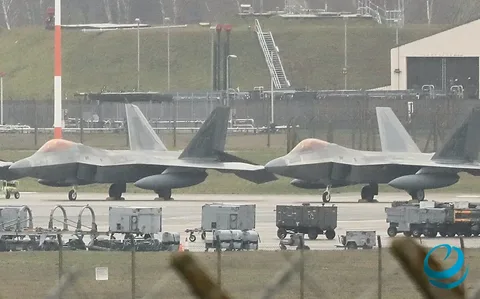
The request was made amid rising tensions between Washington and Tehran linked to Iran’s nuclear programme and broader regional security concerns. US President Donald Trump and senior US defence officials were seeking formal authorisation to use RAF Fairford, home to United States Air Force heavy bombers, and the Diego Garcia base as possible staging points for strikes in the event that diplomatic efforts to curb Iran’s nuclear ambitions fail.
UK Position And Legal Considerations
The UK government, led by Prime Minister Sir Keir Starmer, has taken a firm position that granting such permission could potentially contravene international law if it involved assisting in offensive military action. Official sources say that legal advice within Whitehall emphasises that approving use of bases for attacks without a clear lawful basis under international law could expose the UK to shared responsibility for what might be deemed an unlawful operation.
British officials have repeatedly stressed that routine cooperation with US forces, such as training, joint exercises and mutual defence arrangements, remains unaffected by the refusal to grant permission for offensive operations against Iran. However, the specific authorisation for launch operations from UK soil, even by allied forces, remains subject to domestic legal and political scrutiny.
The refusal came as Washington significantly increased its military presence in and around the Middle East, with additional aircraft carriers, combat aircraft and support vessels deployed, signalling that the US was preparing options for a range of scenarios related to Iran’s nuclear programme and regional posture.
Strategic Importance Of RAF Fairford And Diego Garcia
RAF Fairford in Gloucestershire is one of the most significant US forward operating locations in Europe, regularly hosting heavy bombers and aerial refuelling assets. Diego Garcia, a strategically positioned island in the Indian Ocean, has long been a key base for sustained air operations over the Middle East and beyond.
Under the bilateral agreements between London and Washington, the UK retains sovereign control of both sites and must approve any offensive missions departing from them. While the US military can operate from these facilities for routine activities with minimal interference, any direct use for combat missions has to be authorised by the British government.
In the current environment, senior UK officials concluded that supporting a potential strike — even as a contingency — lacked sufficient legal justification and could expose the government to criticism domestically and internationally.
Impact On The Chagos Islands Deal
The refusal to grant permission is tied closely to broader diplomatic negotiations over the status of the Chagos Islands, including Diego Garcia. The UK has been negotiating a deal with Mauritius that would transfer sovereignty of the islands while retaining access to the base through a leaseback arrangement. The proposed deal, projected to be worth billions over the long term, has been challenged by critics in both capitals.
According to US sources, President Trump’s backing for the Chagos Islands agreement was affected by the UK’s refusal to grant use of Diego Garcia for possible operations against Iran. In public comments on social media, the US president urged Britain not to “give away Diego Garcia” and criticised the proposed transfer of sovereignty.
Reactions From London And Washington
British Foreign Secretary Yvette Cooper has defended the UK position, emphasising the importance of diplomacy and economic pressure in addressing Iran’s nuclear ambitions and broader security threats, while affirming that the UK remains closely allied with the United States on global security matters. She described the refusal to grant permission for offensive operations as consistent with international commitments and legal obligations.
In response, President Trump publicly criticised the UK decision, framing it as a weakening of military cooperation and an impediment to decisive action against Iran, should diplomatic channels fail. His comments underscored the heightened sense of urgency within elements of the US administration to retain a full range of military options.
Diplomatic And Strategic Implications
The dispute highlights the complexity of the UK-US “special relationship” at a moment of acute regional tension. While London and Washington have historically cooperated closely on security and defence, particularly through NATO and bilateral agreements, differences over legal interpretations and strategic priorities have emerged in the context of potential actions against Iran.
International law experts note that the UK’s stance reflects the country’s adherence to legal frameworks governing the use of force, including obligations under the United Nations Charter and related conventions, which emphasise that offensive military operations require clear legal authority. Critics of the UK decision, however, argue that close allies should maintain flexibility in responding to shared security threats, and that refusal could limit effective joint deterrence.
The incident has also brought closer scrutiny to the legal obligations associated with sovereignty and control of military bases abroad, especially where joint operations and leases complicate command structures and permissions.
Broader Regional Context
The UK government’s refusal comes amid a broader backdrop of tensions between the United States and Iran over the latter’s nuclear programme, ballistic missile development and support for proxy forces in the region. Washington has repeatedly emphasised that it reserves the right to take military action if diplomatic efforts to constrain Iran fail, while Tehran has warned that any foreign strike would provoke severe retaliation.
As the US weighs its strategic options, British caution reflects both legal constraints and a policy preference for prioritising diplomatic engagements combined with economic sanctions and multilateral pressure on Tehran.
The standoff over base use underscores the need for ongoing consultations between the UK and the US on defence cooperation and crisis management. It has also stimulated debate within British political circles about the appropriate balance between alliance obligations and adherence to international law.
As discussions continue in Washington and London, analysts say that the UK’s position could influence how future military planning with allies is conducted, particularly in contexts where legal and ethical considerations intersect with strategic imperatives. Defence and foreign policy officials from both countries are expected to engage in further talks to reconcile military cooperation with legal frameworks and shared security goals.

