Call us @+234 806 558 2598

How Sanae Takaichi’s Conservatives Secured Power in Japan’s Election

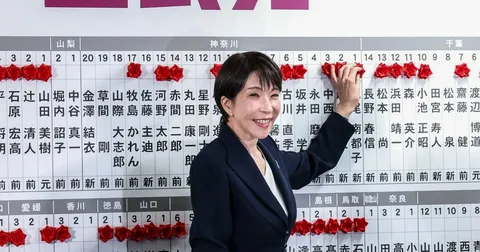
Japan’s Prime Minister Sanae Takaichi has secured a decisive victory in the nation’s February 2026 general election, delivering one of the largest parliamentary majorities in the country’s post-war history and cementing conservative power at the heart of Japanese politics. With her Liberal Democratic Party and its coalition partner sweeping lower house seats, Takaichi’s government is positioned to shape policy with minimal parliamentary resistance.
The election, held on 8 February 2026 amid rare mid-winter weather that brought snow to many regions, concluded with Takaichi’s governing bloc winning a two-thirds “supermajority” in the House of Representatives, the lower chamber of Japan’s National Diet. Her party’s success marks a dramatic rebound from previous setbacks and reinforces her authority after she assumed leadership of the Liberal Democratic Party and became Japan’s first female prime minister last year.
Landslide Victory And Parliamentary Control
According to official and media projections, Takaichi’s Liberal Democratic Party (LDP) won at least 316 of the 465 seats in the House of Representatives. When combined with seats secured by its coalition ally, the Japan Innovation Party, the ruling bloc amassed enough seats to exceed the two-thirds threshold required to override decisions by the upper house, which the coalition does not control.
This level of control makes the 2026 election outcome one of the most powerful mandates enjoyed by a Japanese government in decades. The victory allows Takaichi to expedite legislation, pursue constitutional and defence reforms, and implement significant economic measures without substantial opposition barriers.
Observers described the result as a confirmation of popular support for Takaichi’s blend of economic stimulus policies, security initiatives and responses to domestic challenges. The scale of the win surpassed expectations of many political analysts, who had previously viewed the fractured nature of Japan’s opposition as the main structural advantage for the ruling party.
Road To The Polls
Takaichi took the helm of the Liberal Democratic Party in October 2025, succeeding a predecessor whose administration had lost its parliamentary majority amid public dissatisfaction and internal scandals. After securing party leadership, she quickly positioned herself as a formidable political figure with broad support within the conservative base.
Facing a fragile parliamentary position and seeking a clear public mandate, Takaichi called a snap general election, dissolving the lower house to test voter confidence in her leadership and policy agenda. The decision risked electoral backlash but ultimately resulted in a powerful endorsement at the polls.
This election came after a period of political flux in Japan, which had seen the ruling party’s long-standing coalition weakened and public trust challenged by economic stagnation, rising living costs and contentious domestic issues. The snap election became a referendum on Takaichi’s leadership, and her victory has helped stabilise the ruling bloc’s position.
Core Campaign Themes
Takaichi campaigned on a combination of economic and security issues that resonated with many Japanese voters. She pledged expansive fiscal stimulus aimed at addressing the cost of living, including a high-profile proposal to suspend consumption tax on food for two years, a measure intended to provide financial relief for households. These pledges formed part of a broader package of economic support that appealed across demographic groups.
On national security, her platform reflected concerns over regional tensions, particularly around China and North Korea. Takaichi’s vocal support for strengthening Japan’s defence capabilities, revisiting aspects of the country’s post-war constitution, and pursuing closer alignment with allied partners underscored her more assertive approach to foreign policy.
Her stance on defence and constitutional reform, alongside promises of tax relief and economic support, drew strong support from conservative voters and attracted younger electorates seeking decisive leadership amid social and economic uncertainties. These factors contributed significantly to her electoral success.
Opposition Performance
The main opposition bloc, reorganised shortly before the election as the Centrist Reform Alliance and composed of previously separate parties, suffered heavy losses nationwide. Exit polls indicated that the alliance failed to capture substantial voter support, leaving the opposition fractured and underrepresented in the new parliament.
Political analysts have noted that the opposition’s inability to unify on a compelling platform before the election and internal divisions hindered its competitiveness against the disciplined and strategically organised ruling coalition. This outcome has prompted introspection among opposition parties about future strategy and leadership.
Voter Turnout And Demographics
The election was held under challenging weather conditions, which some analysts had predicted might depress turnout in parts of the country. Despite this, voter engagement remained strong enough to validate the results as a broad endorsement of Takaichi’s policy priorities.
Surveys and early data suggested that support for Takaichi was not limited to traditional conservative bases. Younger voters, particularly those concerned with economic pressures and employment stability, showed increased backing for her economic platform. This cross-demographic appeal was seen as a key factor in securing her party’s wide margin of victory.
Implications For Governance
With a supermajority in the lower house, Takaichi’s government gains a powerful legislative position spanning major policy areas. This includes the ability to override decisions by the upper house, influence parliamentary committees, and pursue major reforms with limited resistance from opposition members.
The government’s legislative agenda is expected to prioritise economic measures, defence and security reforms, and structural initiatives aimed at long-term growth. In particular, the ruling coalition’s strong position places constitutional discussions, including formal recognition of Japan’s Self-Defence Forces, higher on the political agenda.
Economists and market analysts will also be watching how Takaichi balances ambitious fiscal support with concerns about public debt, already one of the highest among advanced economies. Measures such as tax suspension and increased spending have sparked debate about their long-term sustainability.
Regional And International Reactions
International reactions to the election outcome highlighted the significance of Japan’s renewed political direction. Some foreign governments welcomed the clarity of mandate and expressed optimism about deeper cooperation on security and economic issues. Others briefed analysts on cautious observation, particularly related to Japan’s evolving stance on regional security and relations with neighbouring powers.
Relations with China are a particular focus, with tensions already evident before the election due to policy statements on security and defence. The new parliamentary strength may further influence Japan’s posture on regional issues, including engagement with Taiwan and responses to potential threats.
Future Outlook
Sanae Takaichi’s landmark victory has set Japan on a course of conservative governance with strong legislative backing. Her mandate gives her an extended period of political stability, with the next election cycle not due until 2028. How effectively her government addresses economic challenges, navigates international relations and manages domestic reforms will shape Japan’s political and social landscape in the years ahead.
The election result also illustrates the enduring strength of the Liberal Democratic Party in Japanese politics, even after internal challenges and shifting public priorities. Takaichi’s leadership has reinforced the party’s dominant role, and the new parliamentary composition reflects broad voter support for her vision of Japan’s future.

